

Technical Assistance Facility Phase 2
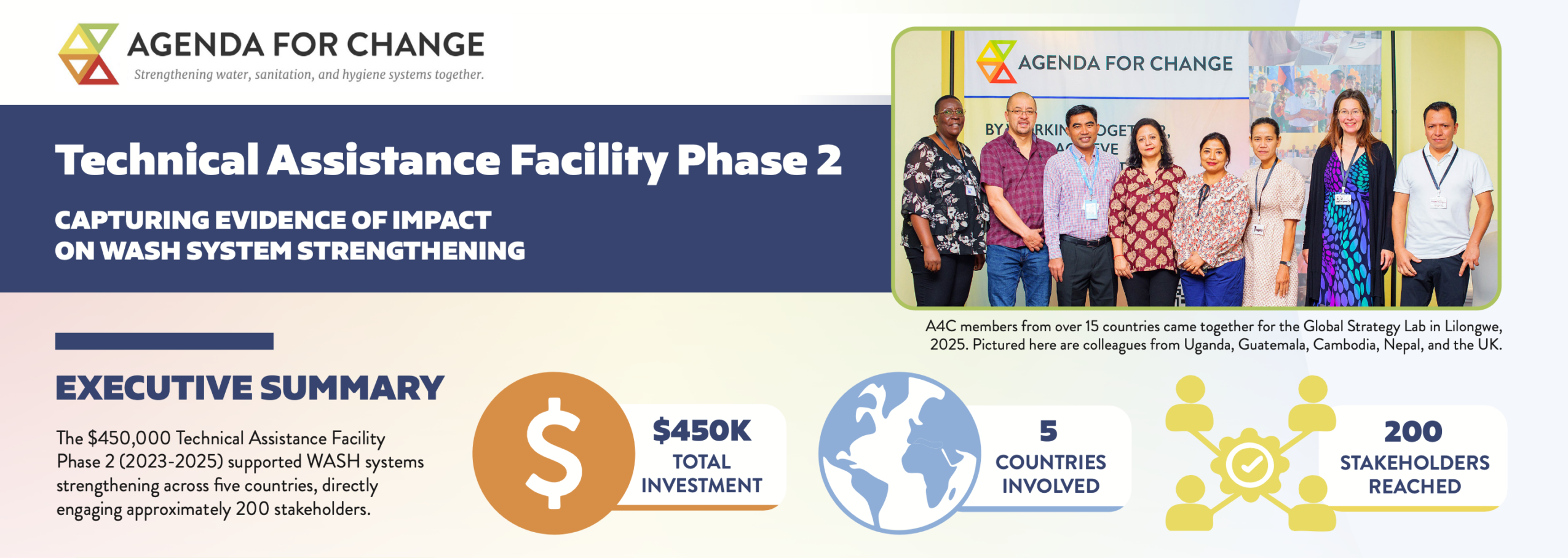
What can $450,000 do for water, sanitation, and hygiene systems across five countries? More than you might expect — if the funding is flexible, strategic, and firmly rooted in government priorities.
The second phase of the Agenda for Change Technical Assistance (TA) Facility (2023–2025) set out to answer exactly that question, directly engaging approximately 200 stakeholders across Cambodia, Ghana, Guatemala, Rwanda, and Uganda to support WASH systems strengthening.
What the Facility Supported
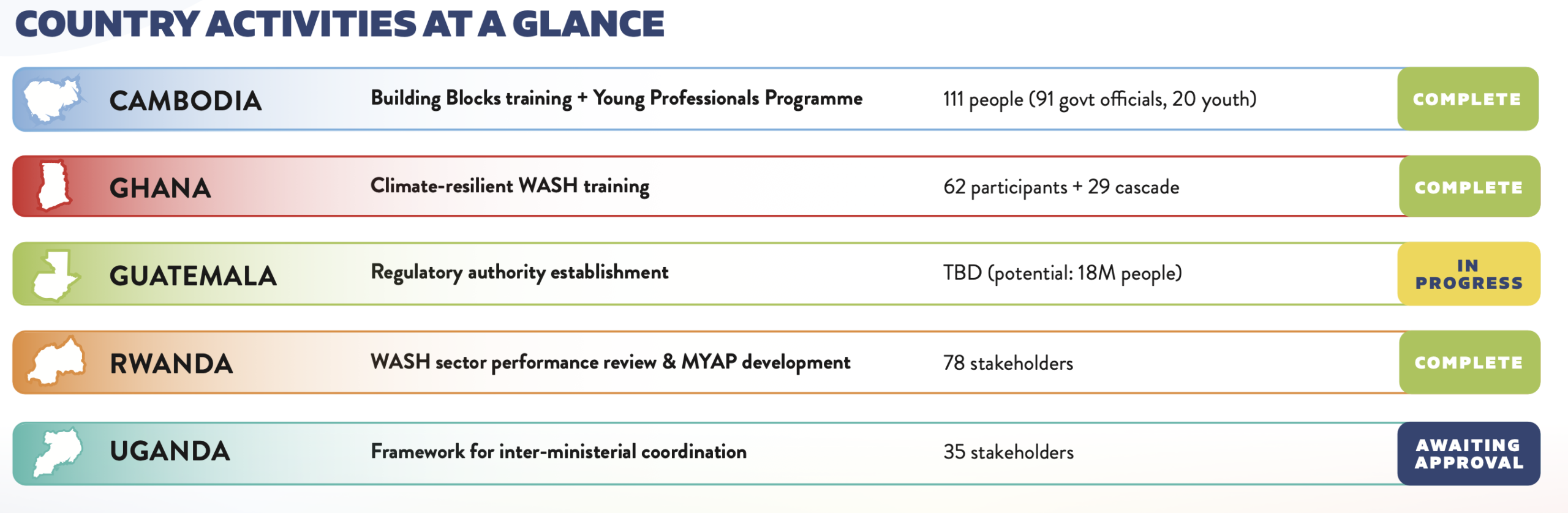
No two country contexts looked the same. In Cambodia, the TA facility supported building block training for government staff and a Young Professionals Programme, investing in the people who will shape the WASH sector for decades to come. In Ghana, it funded capacity building on climate-resilient WASH service delivery. In Rwanda, it supported a national sector performance review and a five-year Multi-Year Action Plan, formally approved by the Ministry of Infrastructure. In Uganda, it helped develop a framework to operationalize an inter-ministerial roadmap for WASH coordination. And in Guatemala, it is supporting the government in establishing the country’s first formal water and sanitation regulatory body — with the potential to benefit up to 18 million people.
Here is a snapshot of what was supported in each country:
Signs of Impact
The indirect returns are already becoming visible: trainings are being scaled up, leadership capacity for systems thinking is growing, sector coordination is strengthening, and a new regulatory arrangement in Guatemala could bring nation-wide benefits if successfully established. These represent important gains for funders interested in strengthening WASH systems over the longer term.
At the same time, the learning brief is honest about its limits. Concrete evidence of longer-term and indirect impacts is less quantifiable — systemic changes unfold over extended timeframes, depend on other stakeholders acting on TA outcomes, and are harder to trace when monitoring frameworks are weak.
What Makes It Work
Across all five countries, the clearest lesson is this: TA-funded activities that have a clear rationale, strong buy-in, and are embedded in formal, government-led structures have the greatest chance of long-term impact. Where TA was co-owned by government and anchored in existing institutions, results followed. Where it remained a standalone process, the path to lasting change became less certain.
“TA-funded activities that have a clear rationale and buy-in and which are embedded in, and supported by, formal (government-led) structures have the greatest chance of long-term impact.”
The Case for Flexible Funding
The TA Facility was never designed to deliver large-scale infrastructure or support service provision directly. It was designed to strengthen the systems that make everything else possible. And the evidence shows that small, flexible funding — timely, locally anchored, and modest in size — can help address specific system gaps, strengthen collaboration, and build momentum for longer-term change.
“While the indirect returns may not always be immediately visible or easily measurable, the TA Facility shows that with the right conditions, even small investments can contribute to broader systems outcomes over time.”