

A new paper from Bethlehem Mengistu, our Executive Director, explores what it really takes to lead when there’s no hierarchy to lean on.
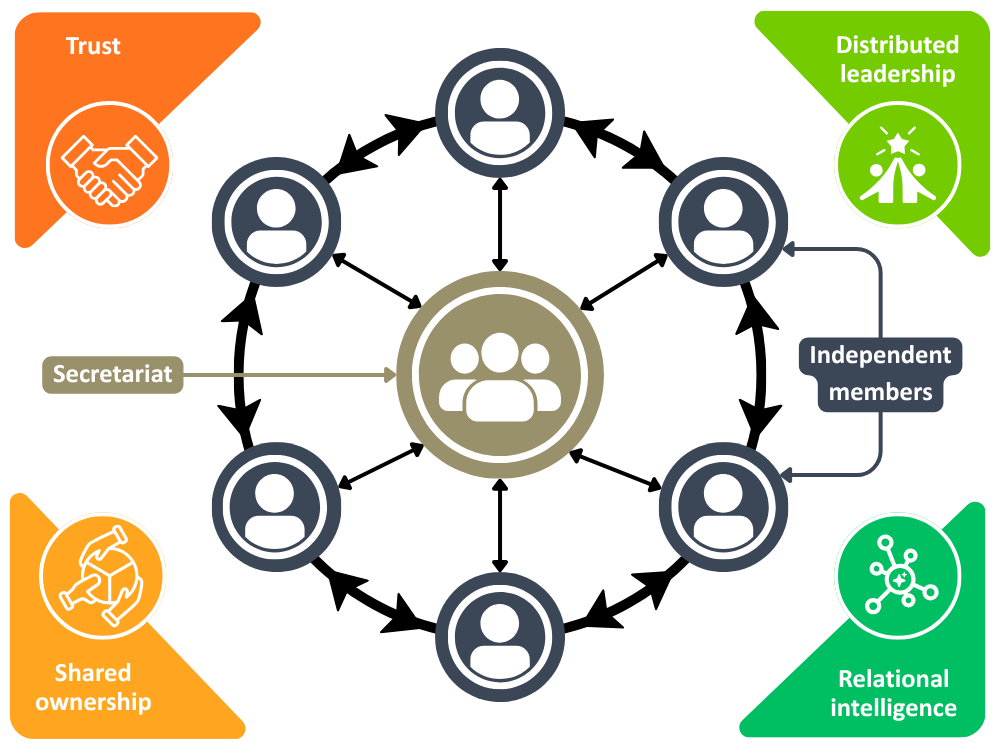
Fig 1: the structure and key attributes of a successful network.
Partnerships and coalitions are everywhere in development work right now. What’s talked about far less is what it actually takes to lead one — especially when no one in the room reports to you.
That’s the gap Bethlehem sets out to address in a new paper published with INTRAC. Drawing on her experience leading Agenda for Change, she introduces a concept she calls leading from the middle — leadership built not on authority, but on trust, relationship-building, and a willingness to let influence circulate rather than concentrate.
“Trust is not simply a by-product; it is the infrastructure that enables collaboration.”
A few of the ideas the paper digs into:
- Trust isn’t a result of good collaboration — it’s the precondition for it. Bethlehem points to Agenda for Change’s own strategy process as a case in point, where slowing things down to genuinely involve members paid off in ways a faster, top-down process never could have.
- Power in networks isn’t just about funding and formal seats at the table. It’s also about who gets to set the agenda and whose expertise is treated as legitimate — questions Agenda for Change has had to confront directly as it’s expanded country-level collaborations to include national governments and organizations.
- The metrics that work for traditional programs don’t capture what systems change actually looks like. She argues for measuring progress through strengthened institutions and partnerships, not just short-term outputs.
- The most underrated leadership skill in this space might be relational intelligence — the capacity to read what’s motivating different actors and find real common ground, rather than technical expertise or project management alone.
It’s a candid, practice-grounded take on a question the sector talks around far more often than it answers directly: what does good leadership actually look like when you can’t just tell people what to do?
Read the full paper for Bethlehem’s complete argument, including how these ideas have reshaped Agenda for Change’s own governance structures: https://www.intrac.org/resources/leading-from-the-middle/