

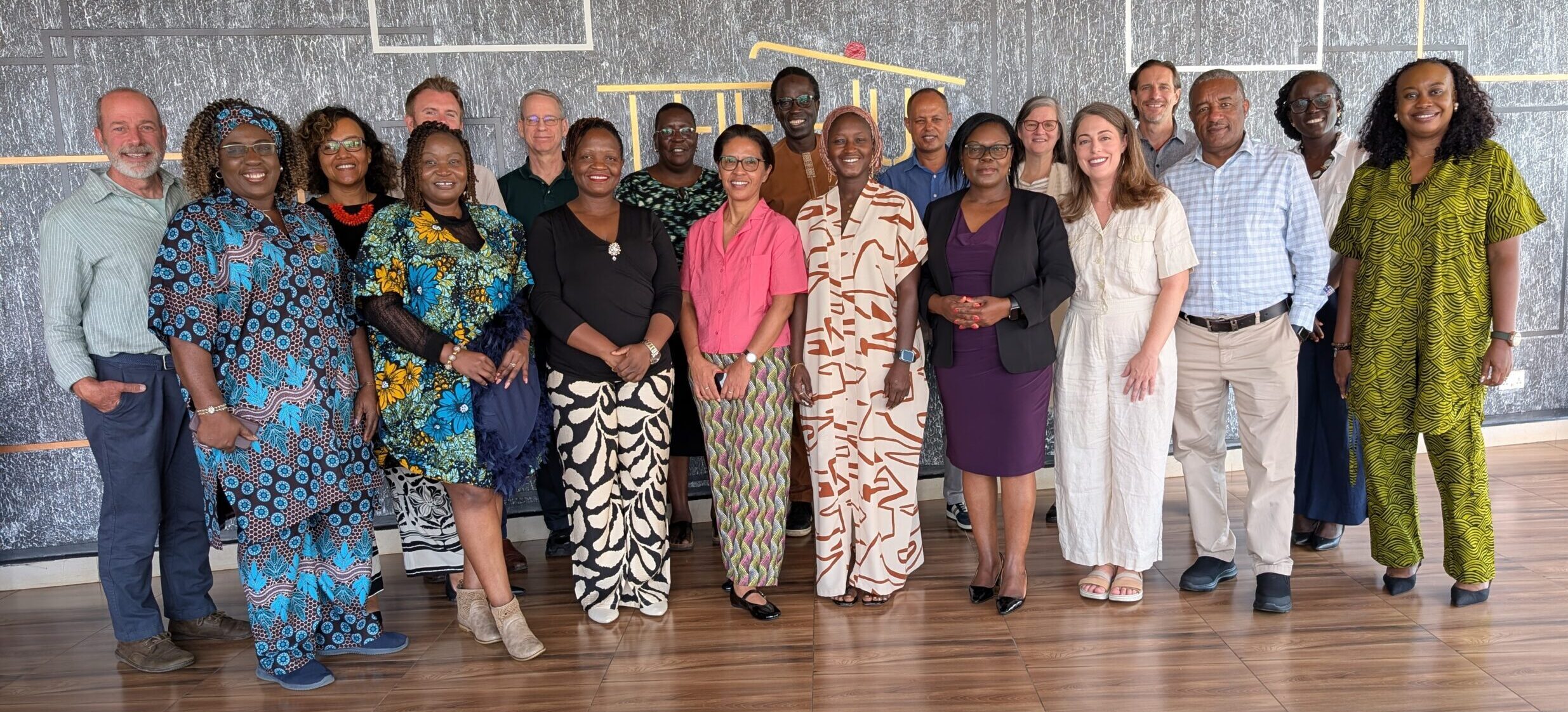
Agenda for Change members, donors, and government representatives from 16 countries gathered in Kigali, Rwanda this August for a 2-day Strategy Workshop.
By Alec Shannon, Director of Operations at Agenda for Change
Back in 2021, we shared a big bet: a complete overhaul of Agenda for Change’s governance structure to put country-level leadership at the center of our work, rather than at the periphery of a global hub. We replaced our Steering Committee with a General Assembly that seated country collaboration representatives alongside member organizations, and we promised to keep sharing what we learned as that structure took shape.
Almost five years later, it’s a good moment to take stock: what’s worked, what’s grown, and where we’re headed next.
Stronger collaborations, sustained investment
The country collaborations we support are stronger than ever. Each year since 2021, they’ve benefited from both catalytic and technical assistance funding from A4C, and increasingly, that funding has built on the year before rather than starting from scratch. The result isn’t a series of one-off projects but sustained services and deeper relationships with partners and government counterparts, compounding year over year. You can see this compounding effect firsthand in our growing library, including here, here, and here.
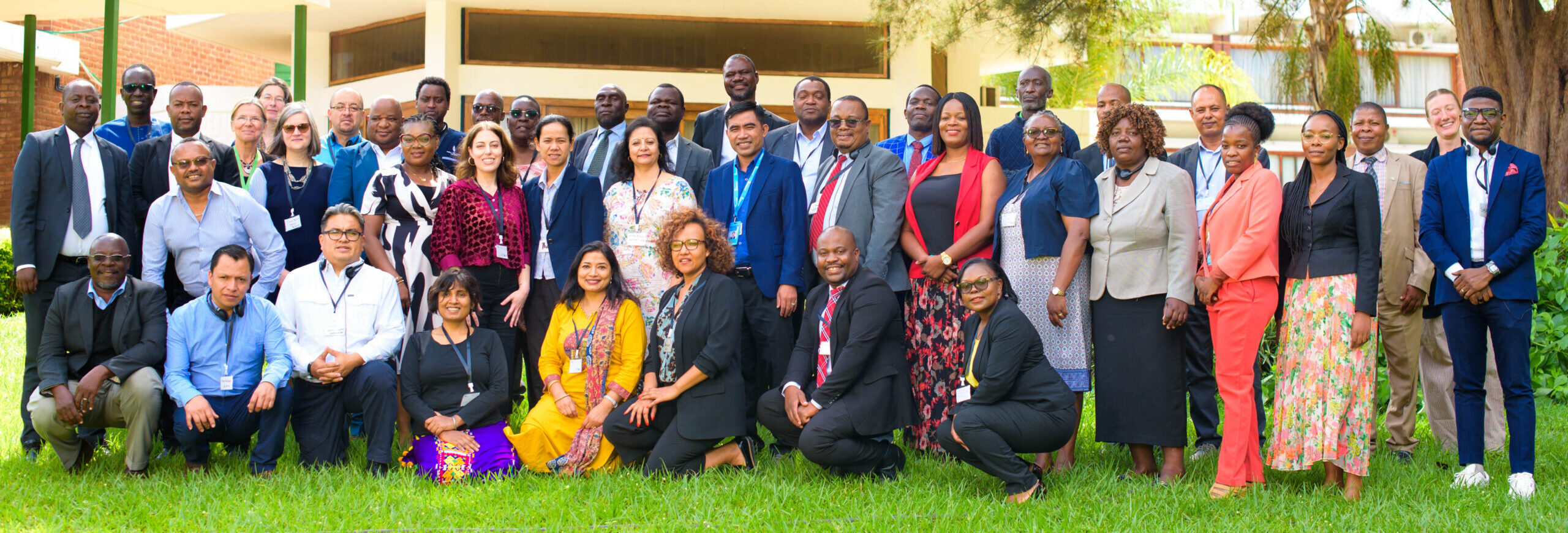
Agenda for Change members, donors, and government representatives from 15 countries gathered in Lilongwe, Malawi in May 2025 for a 3.5 day Strategy Lab.
Growing, deliberately
Our membership has grown, and so have the number of active country collaborations. As we shared in 2021, we introduced a new methodology for member invitations: nominations are meant to originate at the country level. In practice, that hasn’t always happened exactly as designed, but every invitation is still vetted by the relevant country collaboration before it goes out, which has kept quality and fit high even when the process hasn’t been perfectly bottom-up. This country-vetted approach has also strengthened the link between practice and learning: a new member’s programmatic presence is verified before they can join, making our community of practitioners more intentional, and stronger.
Current member count: 20 (17 Full, 1 Associate, 2 Strategic Allies)
Number of active country collaborations: 12
[for comparison to the original 14 members and 8 collaborations in 2021]
Accountability by design
We’ve also introduced new accountability measures for all members, at both the global and country collaboration levels. Each member now signs an annual commitment letter, pledging a set number of FTE days contributed to A4C’s work (based on their level of membership). We’ve also paired this with exit mechanisms for members who aren’t able to adhere to these standards.
This matters because A4C isn’t a fee-based membership: we rely on in-kind contributions for shared gains across the collaborations we support. We’re only as strong as our members’ engagement, so making that engagement explicit and accountable has been essential to keeping the model viable as we’ve grown.
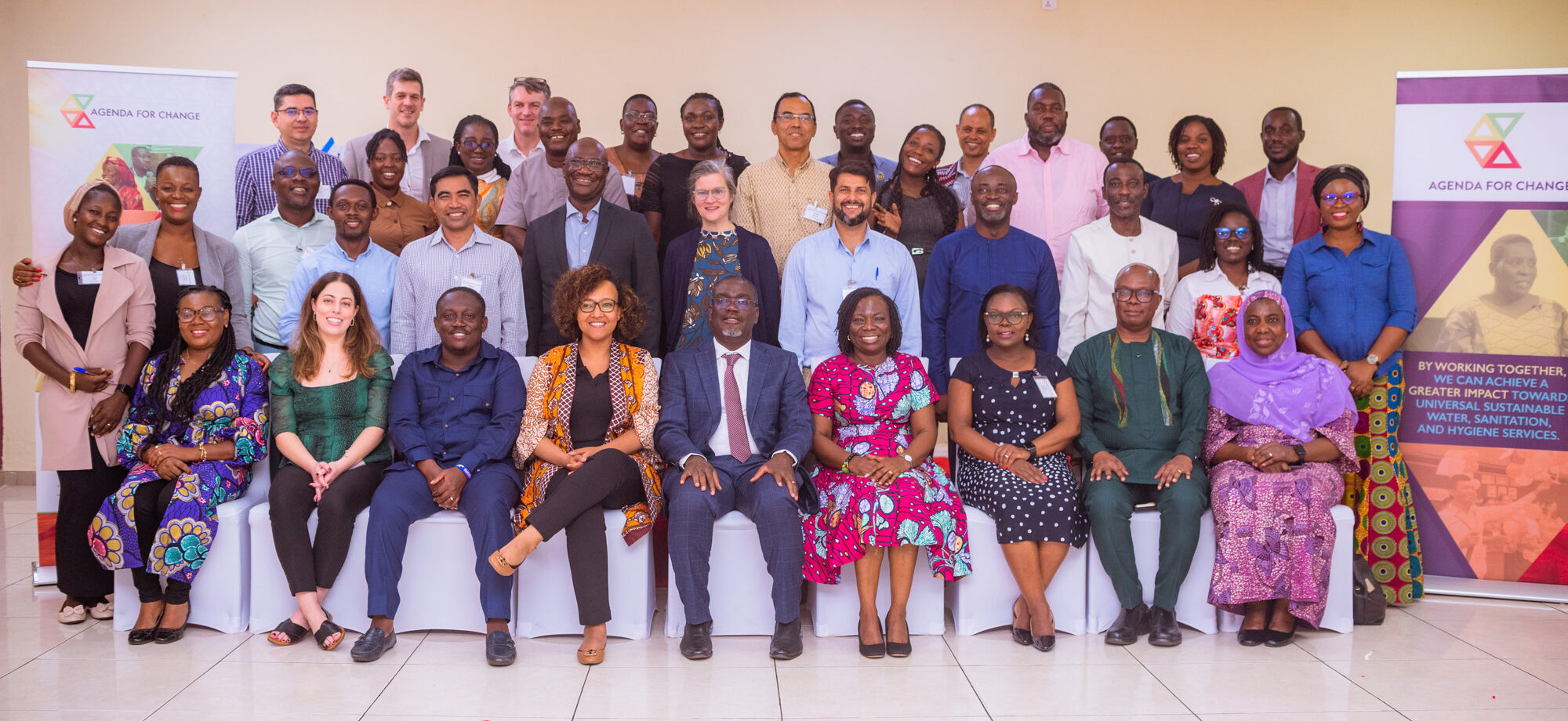
Agenda for Change members, donors, and government representatives from 12 countries gathered in Accra, Ghana in November 2023 for a 3-day Learning Meeting.
New collaborations, innovative ideas
Nigeria and India are two of our newer collaborations, and both benefited from more hands-on, 1:1 support from the Secretariat as they established their collaborations for the first time. Nigeria’s collaboration also introduced something we hadn’t formalized before: a Collaboration Charter, spelling out expectations and responsibilities for members from day one. It was such a clear win that we’ve since adopted it retroactively across all of our country collaborations. It’s also a strong indicator that the best ideas for strengthening this model are coming from within the collaborations themselves.
It’s a good example of what the 2021 governance shift was supposed to unlock: innovation moving within and between country collaborations, not just down from the Secretariat.
Two at the helm
Leadership within our collaborations has also shifted over time, with new member organizations stepping into the representative role as duties change hands. Rather than treating that as a hurdle, we’ve built for it: we encourage that all collaborations use a shared leadership model, where two member organizations jointly manage the collaboration at the strategic level. It’s a genuinely shared responsibility rather than resting on a single organization’s shoulders, which makes leadership transitions smoother and collaborations more resilient when duties shift.
Government at the table
Perhaps the clearest sign of progress: long-built relationships with national governments are more visible across countries, driven by our members’ sustained work and consistent messaging on systems strengthening. In a growing number of places, A4C members have become the go-to platform for governments looking to consult on WASH systems strengthening – a clear shift that reflects years of relationship-building, not a single campaign or event.
Nepal is a standout example. Earlier this year, their collaboration co-hosted the Global South WASH Financing & Sustainability Conference alongside the national government and other development partners, a level of shared ownership that would have been hard to imagine at the start of this journey.
Uganda offers another: A little more than a month ago, their collaboration hosted a multi-day national systems strengthening workshop that brought together government officials, bankers, ministry staff, and development partners in the same room, working from the same agenda.
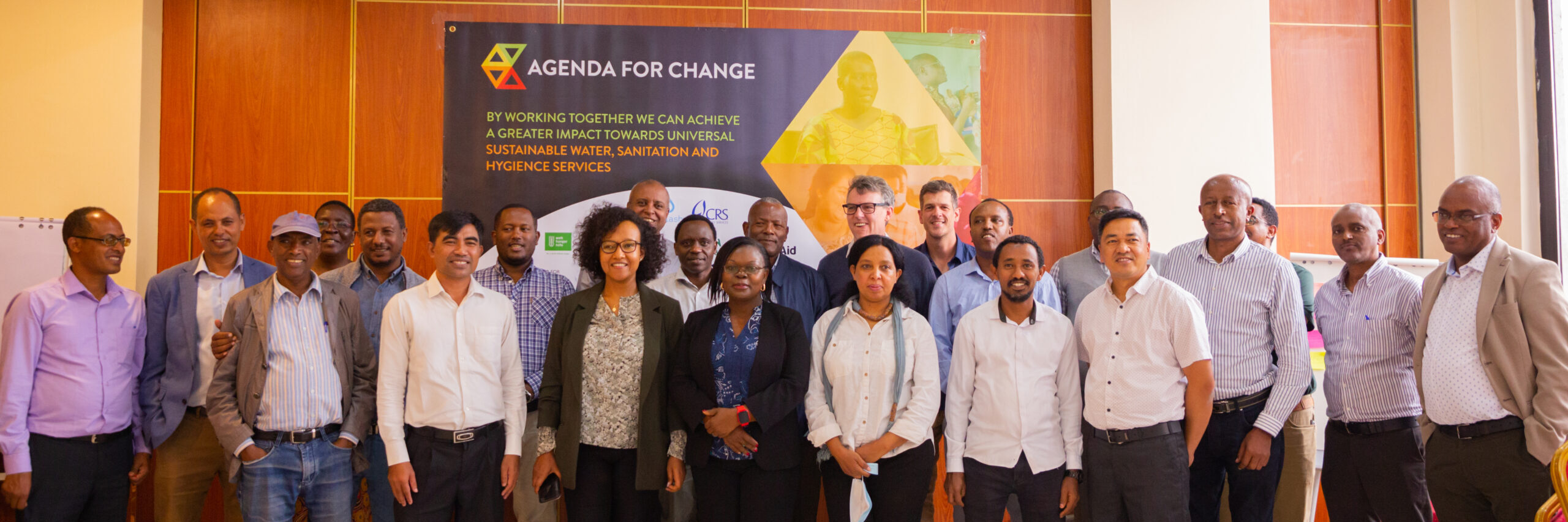
Agenda for Change members and government representatives from 6 countries gathered in Addis Ababa in May 2022 for a 3-day Regional Learning Meeting.
What’s next
We recently gathered at our Global Strategy Workshop in Kigali, alongside the Kigali Water and Sanitation Systems Leadership Symposium, bringing members, country collaboration representatives, government officials, and donors together to look ahead to the next three years, while building on our existing model. We expect our collaborations to grow stronger, our membership to continue to diversify, and our model to keep proving its worth.
WASH systems strengthening is now central to how the sector talks about sustainability, a shift A4C members and collaborators helped drive, and we believe a platform built on shared ownership and mutual accountability is more relevant than ever. We’re optimistic about the chapter ahead.