

A story from World Vision on how partnerships and systems strengthening are helping communities in Indonesia move toward lasting WASH access.
By Kristie Urich, WASH Technical Director | International Programs | World Vision U.S.
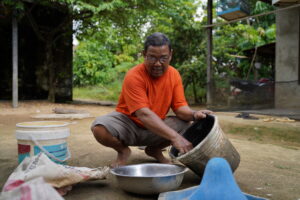
In Sekadau, Indonesia, Kurniawan kneels beside a newly constructed latrine, fitting a ceramic gooseneck toilet pan into place. Just a few years ago, he volunteered his time to help neighbors move away from open defecation after attending sanitation workshops led by Wahana Visi Indonesia.
“I wanted to fight for the community”, he says.
What began as unpaid volunteer work has since evolved into a small sanitation enterprise. Kurniawan and his team have built hundreds of latrines in their village and neighboring communities, training others, and responding to growing demand.
Kurniawan’s journey reflects a key dimension of WASH systems strengthening: sustainable services depend on local capacity and functioning markets, not one-time installations.
Sekadau District is one of 50 districts across 20 countries where World Vision is advancing universal water, sanitation, and hygiene service coverage. Progress is rooted in aligning with district authorities, strengthening local service providers, and embedding sanitation and water services within the local economy. By moving beyond awareness campaigns to market-based solutions and district-level coordination, the system itself becomes more resilient and less dependent on external actors.
Read the full story to see how systems strengthening is advancing universal service coverage in Sekadau. Discover Kurniawan’s journey and its impact on local WASH systems.