

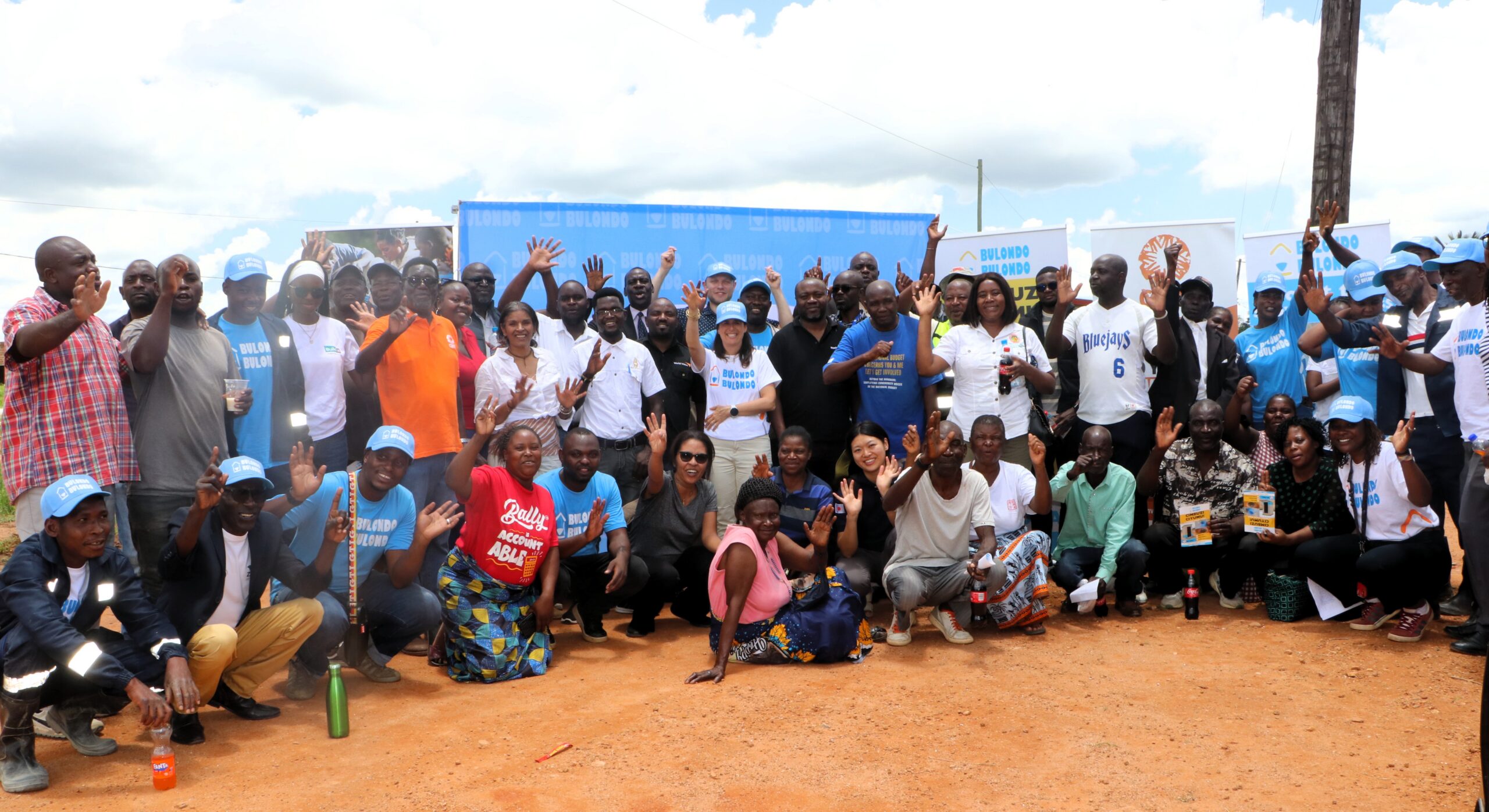
iDE, CARE, IDinsight, government, and community members gather to see latrine options at Bulondo Demo Day. This community exhibition was held to showcase and market test new, affordable toilet and latrine options designed to meet local preferences for durable sanitation solutions to improve local health and hygiene (iDE).
In case you missed it: Read our first blog in this series.
Few things illustrate systems strengthening more concretely than what happens when organizations set aside institutional ownership and build something together. We’re continuing to follow our members CARE and iDE, and their partner IDinsight, as they share what that looks like in practice: honestly, and in real time. This post draws on two companion pieces published by CARE and IDinsight, linked at the bottom.
Letting go of ownership
Since 2024, the three organizations have been testing whether market-based sanitation (MBS) can scale in rural and peri-urban Zambia. Their partnership runs on a simple but demanding premise: organizations with complementary strengths can achieve more together than apart, if they’re willing to genuinely share decisions, pool assets, and admit that someone else might know more.
That’s harder than it sounds. CARE is investing in scaling another organization’s model. iDE is opening its proven approach to outside experimentation. IDinsight is bringing its measurement expertise to ensure the partnership follows what the data reveals, even when that’s uncomfortable. None of this is standard practice in a sector where funding structures often reward organizations for promoting what they themselves created.
CARE’s team had been questioning that pattern since 2020, shaped in part by the critique of “Not-Invented-Here Syndrome”: the idea that large global organizations should stop seeing themselves primarily as engines of innovation and instead become platforms for scaling what already works. Together, the three partners bring what no single organization could alone: product design and entrepreneur training expertise, trusted community and government relationships, and rigorous evidence and measurement.
Choosing where to test
Rigorous site selection mattered as much as the partnership itself. MBS has a strong track record in South and Southeast Asia, but results in Sub-Saharan Africa have been more modest, partly because the enabling conditions differ. The partners needed a site that would fairly test the model, not just confirm it under favorable circumstances.
Critically, ground research shaped the choice as much as desk analysis. Of households surveyed in Southern Province, 98% agreed that owning an improved latrine matters, but 76% named affordability as the main barrier. That finding became the model’s central focus, and it only emerged because the partners went looking.
Building under scarcity
Perhaps the most distinctive feature of this work is what they call the “cactus pilot” approach. A cactus doesn’t need ideal conditions to thrive: it’s built to be resilient under scarcity, to store what it needs, and to keep growing when resources are limited. That’s the standard this partnership has set for itself. Any model can survive under ideal conditions with enough grant funding, but for scale to be feasible, it has to work in the real world: lean budgets, contributed staff time, and constrained flexibility. If the bootstrapped version works, the model is durable. If it doesn’t, that’s essential learning too.
More than two years in, the partnership is still operating that way by design.
Why this matters
The development sector has long rewarded novelty over proven impact, and organizational ownership over shared ambition. What CARE, iDE, and IDinsight are attempting is a direct challenge to both of those defaults. It won’t always be tidy, and they’re not pretending it will be. In fact, it might be downright spiky at times. But that kind of institutional honesty is exactly what the sector needs more of.
We’ll keep sharing what they learn.
—
Read the full blogs from CARE and IDinsight: Radical collaboration: Why we’re building a sanitation partnership the hard way & Where to test a model built for scaling
Landing page for the CARE blog series: https://www.care.org/case-studies/tag/lean-market-based-sanitation-partnership-blog/